I first came across the name Cho-yun Hsu (许倬云) in other people's essays on Chinese history. He was quoted often enough that I eventually bought his Ten Thousand Ages of Rivers: Turns and Unfoldings in Chinese History and Culture (《万古江河》). Later I learned that he had once been, in a loose sense, a teacher to Wang Xiaobo, and that he had taught at the University of Pittsburgh for decades.
This October I went to Pittsburgh. Someone who works in e-commerce and AI setting aside a whole morning to look at a historian's manuscripts in an archive sounds a little like giving yourself a part in a film. But I genuinely wanted to go. I have always liked this kind of thing: you have read the books, the man is gone, and the paper he wrote on is still sitting in some storeroom. Make an appointment and you can sit right in front of it. The moment your hand touches the page, it feels as though you have made some connection with history, had a short conversation with it.
How It Started: From a History Book to Pittsburgh
Cho-yun Hsu was born in Xiamen in 1930, his family from Wuxi in Jiangsu. He took his bachelor's and master's degrees in history at National Taiwan University and a PhD from the University of Chicago in 1962. From 1970 he taught in Pitt's history department, with a joint appointment in sociology, and retired at the end of the nineties. He died at home in Pittsburgh on August 3, 2025, at ninety-five.
Ten Thousand Ages of Rivers is his general history of China. I have never read history in any orderly way; I read what is readable, and this book is readable. He does not slice the past dynasty by dynasty. He uses the image of a river instead: a trickle at the source, taking in tributaries as it goes, widening the further it flows. Chinese culture grew up the same way, giving some things out and taking others in. He later said that writing the book was the fulfilment of a vow, a way of taking what scholars had locked inside their monographs and writing it for ordinary readers. I am one of those ordinary readers, so I accept the gift.
He wrote a great many books, all with grand titles. The one that concerned me directly this time was another: Wind and Rain over the Land: Cho-yun Hsu on the Affairs of the World (《风雨江山》), published in Taipei by Commonwealth Publishing in 1991, a collection of his short pieces on world affairs.
Having come all the way to Pittsburgh, I knew that if I didn't go and look at the papers he left behind, it would nag at me once I got home.
The Day at the Archives
His papers are held by Pitt's Archives & Special Collections, under the name Cho-yun Hsu Papers, collection number UA.90.F97, spanning roughly 1970 to 2008. You don't read them at Hillman Library on the main campus; you go to the Archives Service Center at 7500 Thomas Blvd, some way from the university. I had booked ahead and went on the morning of October 5.
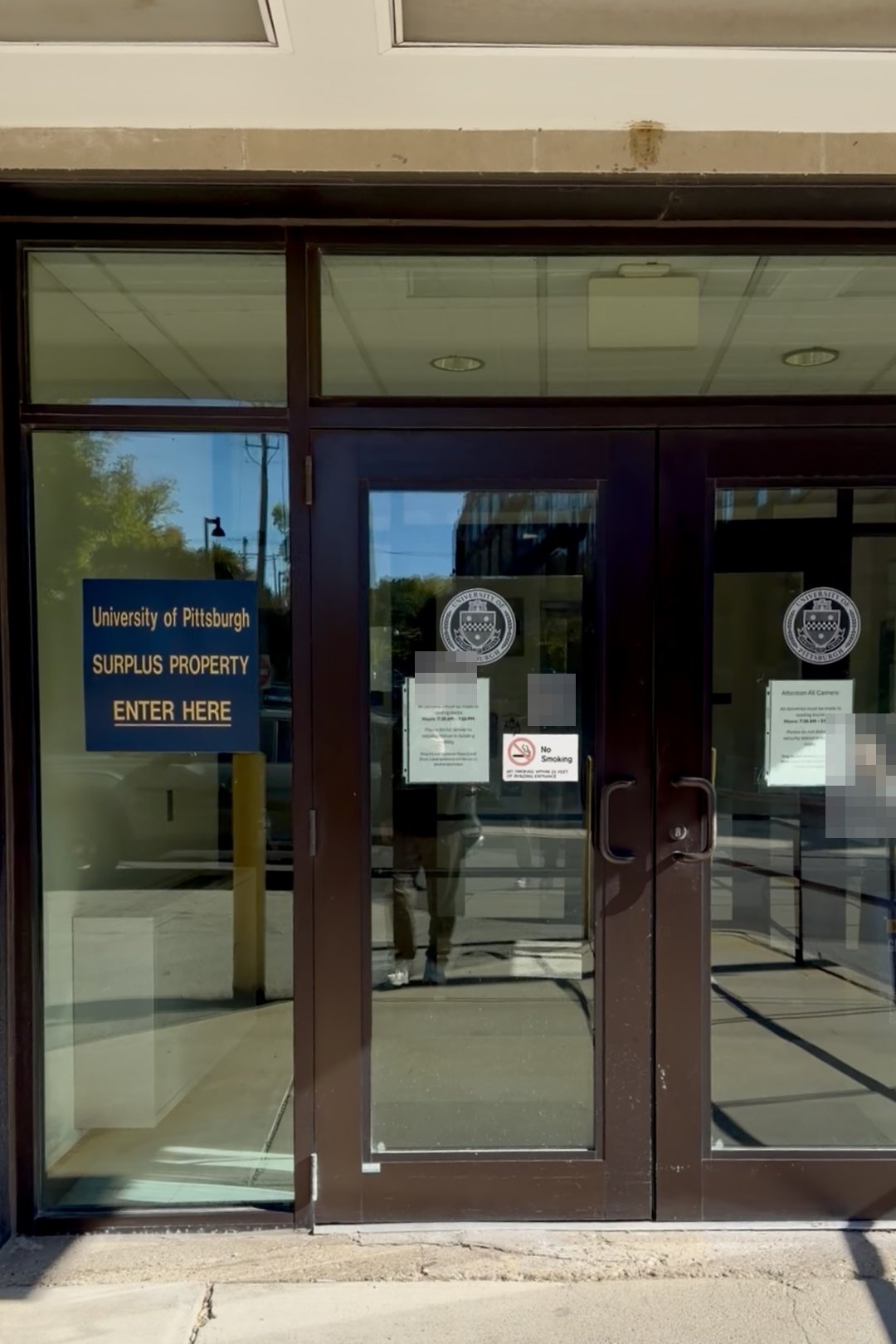
You pick up a visitor badge at the door and go to Reading Room 303. The procedure is simple: you may photograph with your own phone, after signing a form acknowledging the rules on photography and confirming it is for personal research.
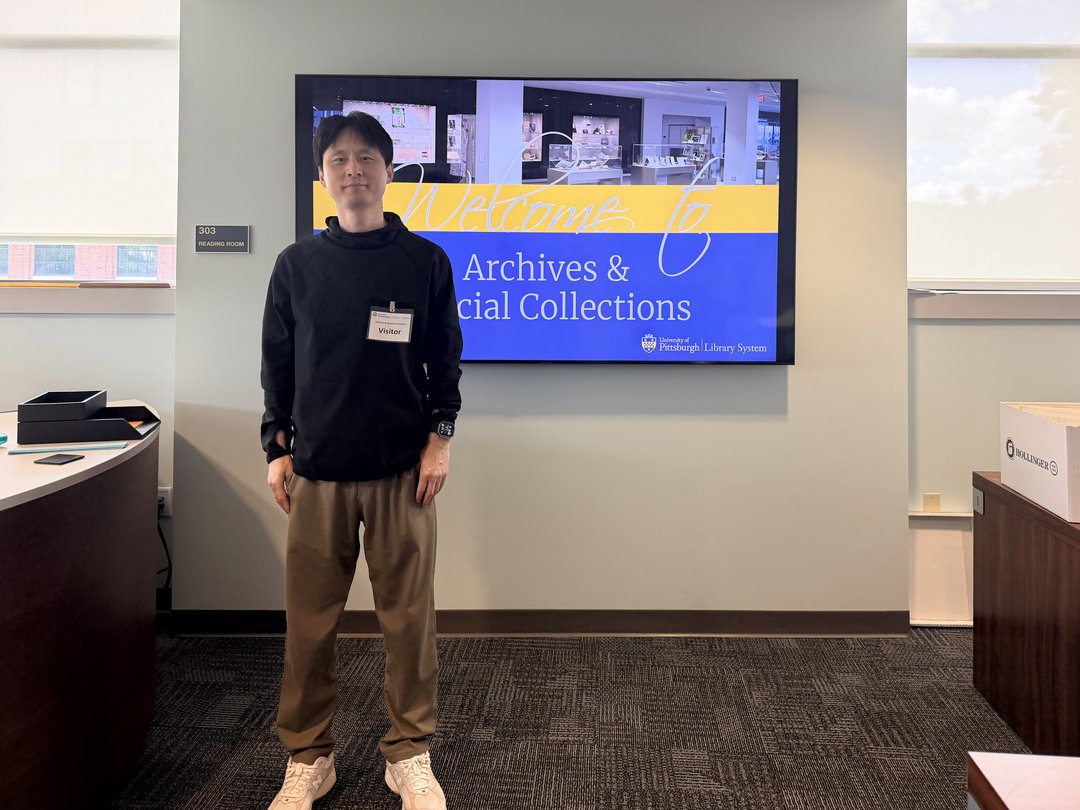
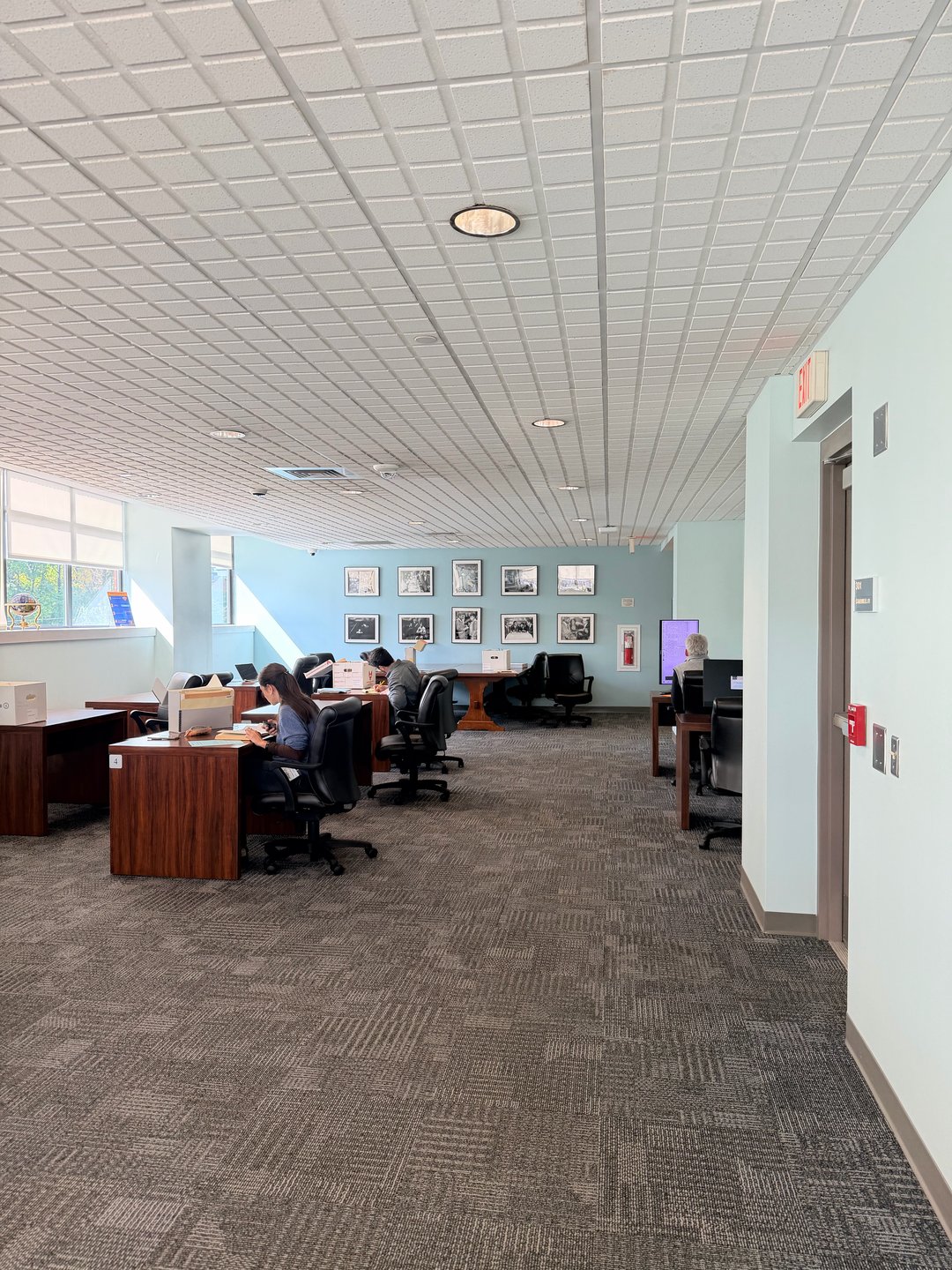
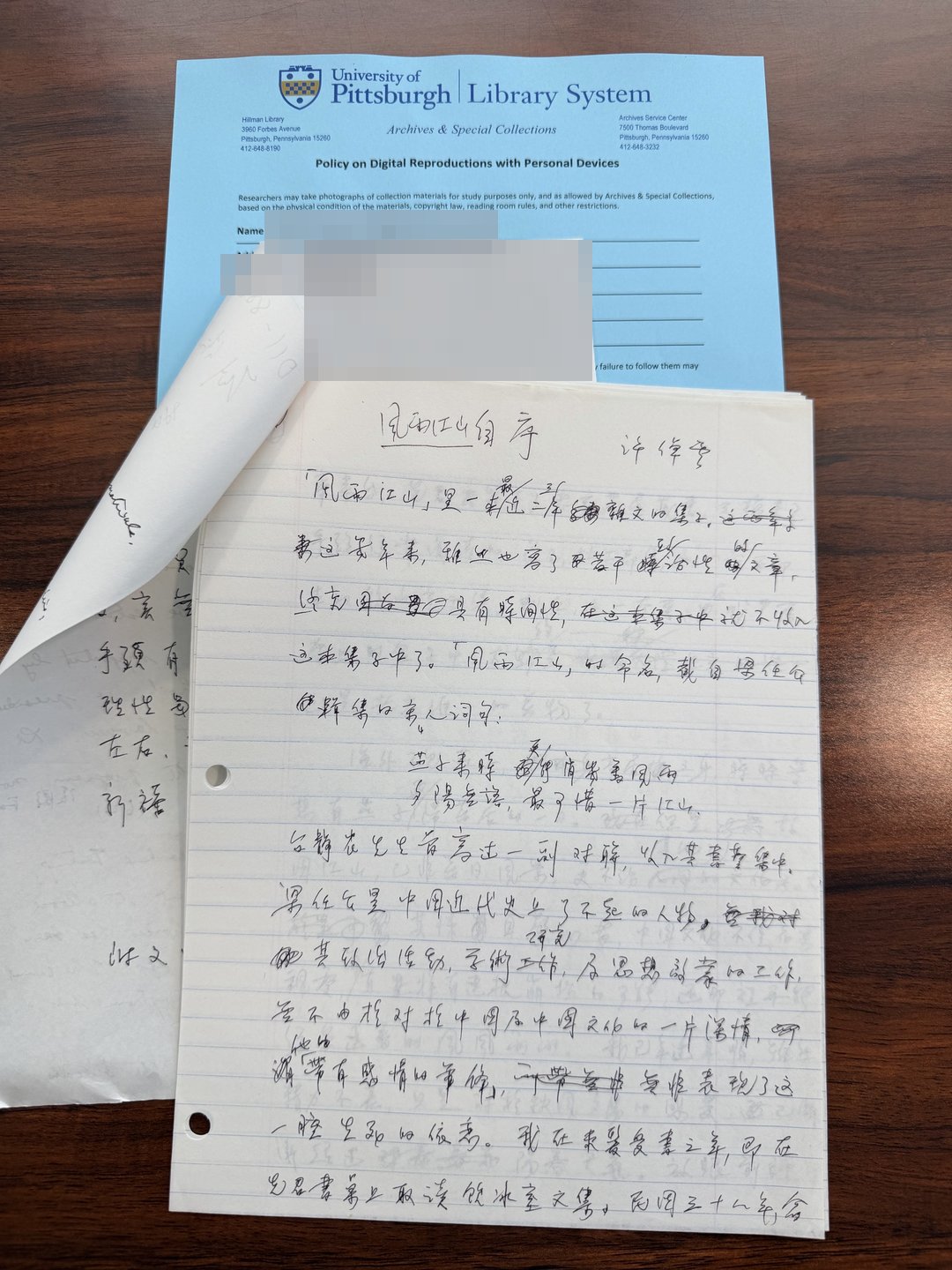
Among the materials brought out was a manuscript of the preface to Wind and Rain over the Land. At the top of the first page it says "Preface to Wind and Rain over the Land," the title underlined, his name signed beside it. The paper is lined in blue. The writing is quick and dense, with words struck out and others squeezed in between the lines. You can tell it is a working draft, not the fair copy made for other eyes.
The book was printed in 1991, more than thirty years ago. Anyone can buy the printed book. This one page of crossings-out exists only once in the world. I took a photograph of it.
In my day job I watch conversion rates, ad spend, and whatever the models updated overnight; nearly all of it is about tomorrow. That morning there was nothing to rush. I just sat there and watched how an old gentleman, decades ago, revised his own preface: which word he crossed out, what he replaced it with, where he paused to think. I can't say what use any of this is. Probably none, which is exactly why it felt rare.
The Prose Is Simply Good
A scholar who writes well is nothing unusual. What is unusual about Hsu is that his good writing doesn't lean on ornament. It rests on things that are concrete.
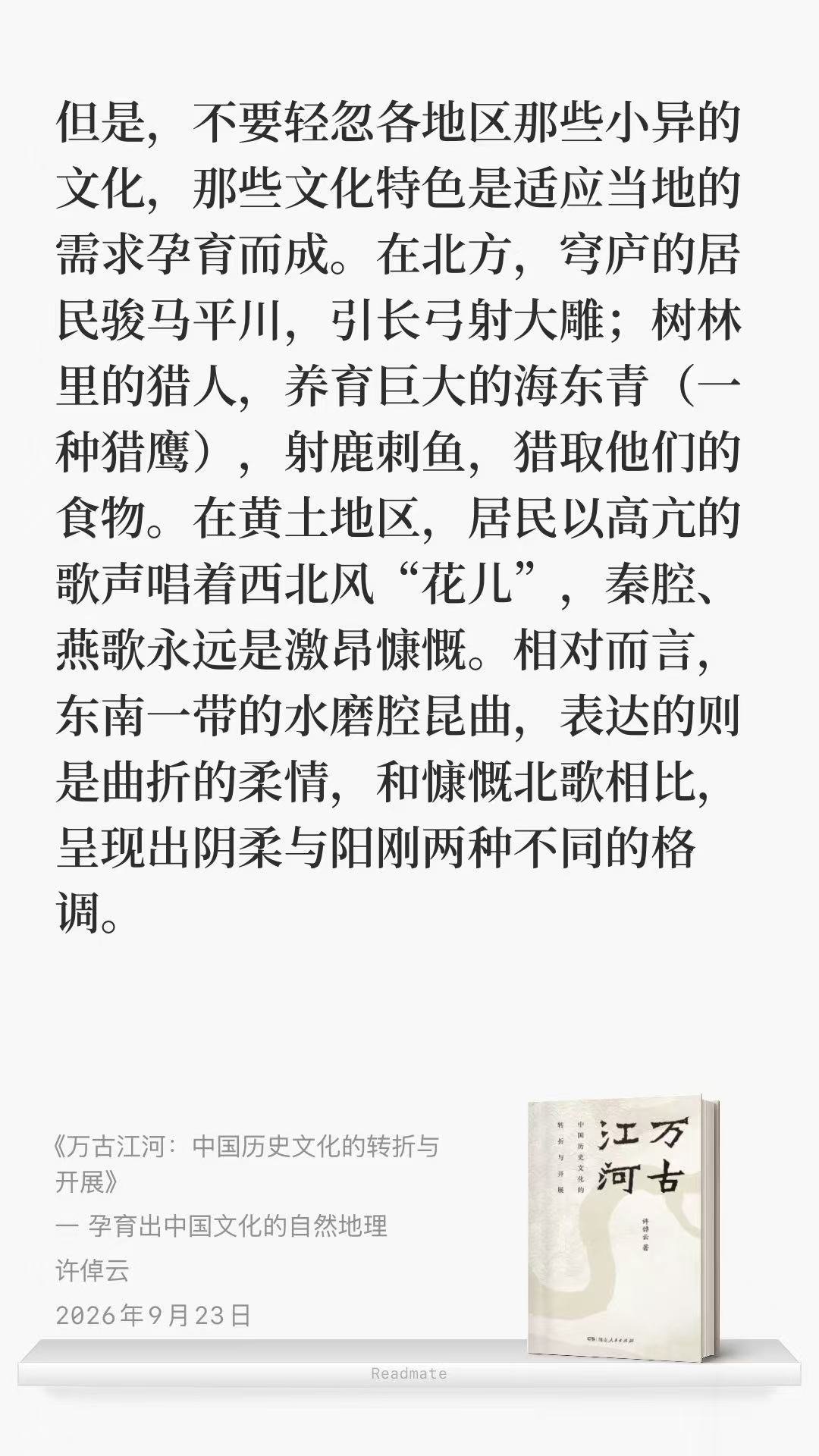
In the section of Ten Thousand Ages of Rivers on "the natural geography that nurtured Chinese culture," I once underlined this passage:
"Yet one must not overlook the small differences among the cultures of each region; those particular features grew out of what each place required. In the north, the people of the felt tents had fine horses and open plains, and drew their long bows to shoot great eagles; the hunters of the forests raised the huge gyrfalcon, shot deer and speared fish for their food. On the loess lands, people sang the northwest's hua'er in high, ringing voices, and the opera of Qin and the songs of Yan were forever stirring and impassioned. By contrast, the polished, lilting Kunqu of the southeast expressed a winding tenderness, and set beside the impassioned songs of the north, the two show the different tempers of yin and yang, the soft and the strong."
A passage about geography, and in it there are horses, bows, falcons, hua'er, Qin opera, and Kunqu. A textbook would probably put it as "regional cultures differ owing to differing natural conditions." Same meaning, and you remember nothing afterward.
What I am reading now is his Cho-yun Hsu on America: A Modern Western Civilization in Constant Change (《许倬云说美国》), published by SDX Joint Publishing in Shanghai in 2020. It is about what he saw and heard in sixty years of living in America, moving from people and events to institutions and history, and it too is very well written. A man of ninety writing a book with that much appetite for it: a reader my age can't help feeling a little ashamed.
In the chapter "America over the Past Twenty Years," there is a sentence I underlined:
"America began with Puritans in search of free land; the 'individual' in its individualism was restrained by faith and knew where the limits lay. Now faith has thinned, and individualism has sunk into selfishness."
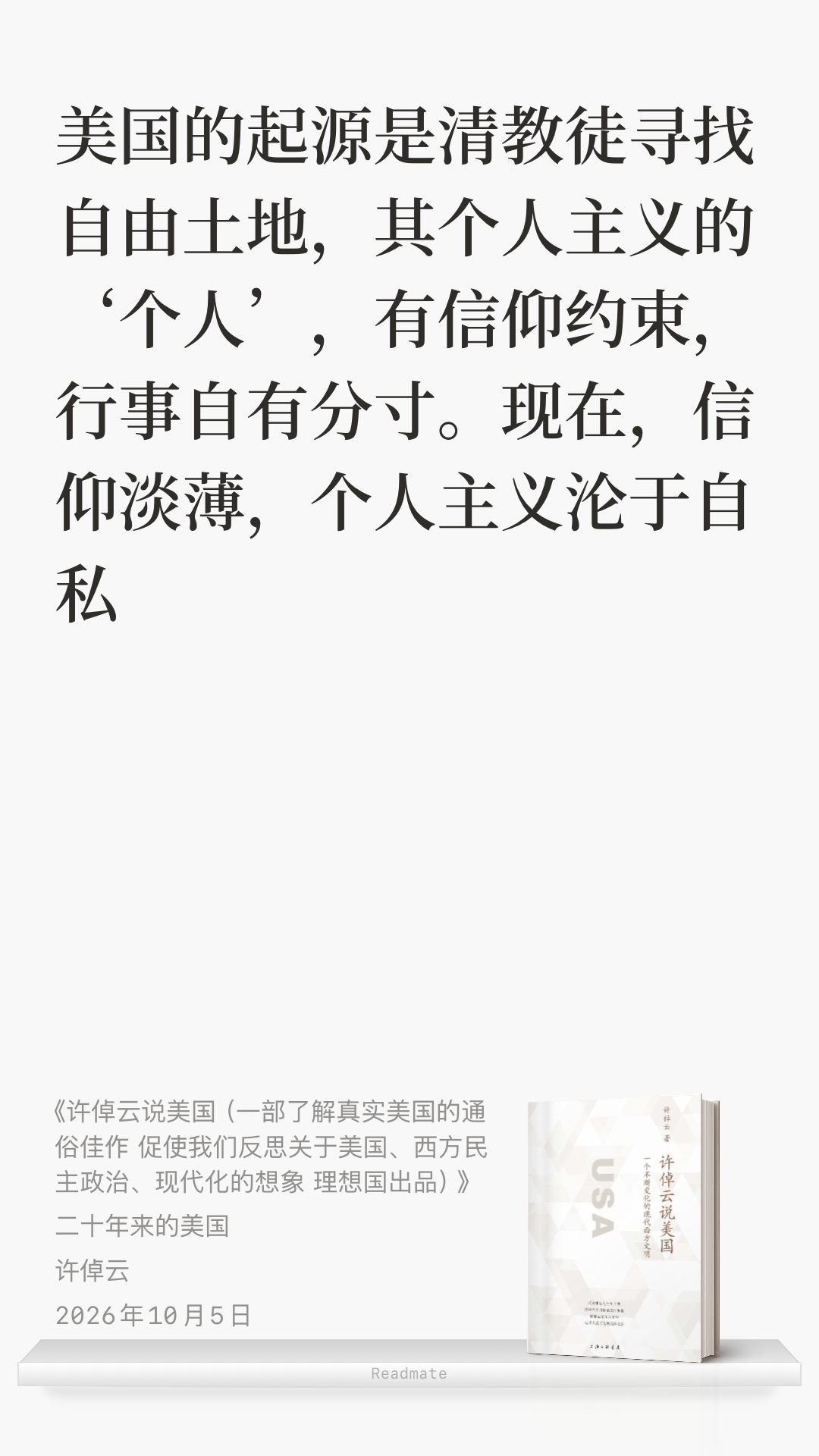
The sentence struck me, because I was in Pittsburgh at the time. The city is full of things given away by an earlier generation of the very rich. In 1895 Carnegie handed the people of Pittsburgh a library together with a museum and a music hall, which are today's Carnegie Library and Carnegie Museums. In 1900 he paid to found the Carnegie Technical Schools, later the Carnegie Institute of Technology, which in 1967 merged with the Mellon family's Mellon Institute to become what is now Carnegie Mellon University. Fallingwater, which I also visited, was the weekend house the department-store owner Kaufmann commissioned from Frank Lloyd Wright. In 1963 his son, Edgar Kaufmann Jr., entrusted the house and several hundred acres around it to the Western Pennsylvania Conservancy, and it opened to the public the following year.
The rich still give today, and not small sums. It is only that, taken as a whole, the giving seems to circle a little more around the givers themselves. That spirit hasn't disappeared, and I don't think today is entirely different from the past. It has just thinned a little, the way Mr. Hsu says faith has.
In his preface he writes of the Yangtze leaving the Three Gorges in the same manner: "The river flows on eastward. Out of the gorges it pours a thousand li in one rush, into the hills and lakes of Hubei and Hunan, and there, vast and unbridled, it at last becomes something great." "The river flows on eastward" is an old turn of phrase from the Commentary on the Water Classic, and it sits there without the least awkwardness. When a scholar of ancient and socioeconomic history is willing to spend that kind of effort making his sentences run smoothly, readers can feel it.
Hopes Glimpsed in the Manuscripts
The papers include other pieces too, on relations across the Taiwan Strait and on other subjects. I won't reproduce the texts. The titles alone are enough to get them called "not harmonious."
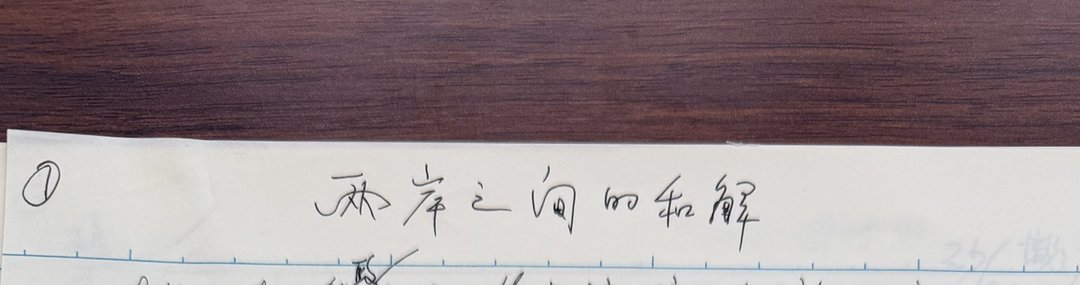
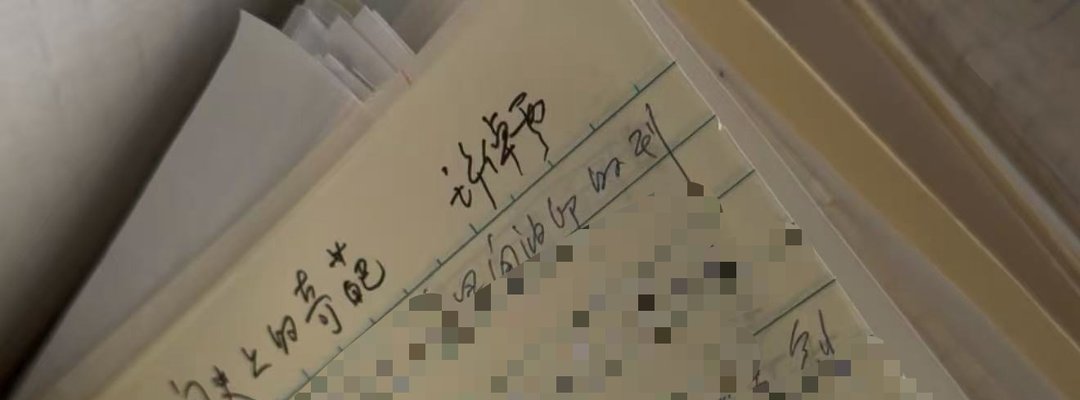
My impression, leafing through, was that he had placed great hope in dialogue and peaceful communication between the two sides. Globalization was gathering strength then, and he hoped that on that rising tide there would be more coming and going, more talking.
Those hopes mostly did not come true. The world has gone back to the old road of mutual suspicion and hostility. Sitting in Room 303 looking at those titles, and thinking of the news of the past few years, I felt quite low. A man who spent his life writing about how cultures grow by giving and taking had, on his manuscript paper, earnestly hoped for reconciliation. That alone is enough to make one sigh.
In the End
The preface to Ten Thousand Ages of Rivers closes with the line: "The rivers of ten thousand ages flow on, day and night, without ceasing."
Mr. Hsu died last year. His books are still on sale. His papers sit in that building on Thomas Blvd, filed under a collection number, brought out whenever someone makes an appointment. This time I was one of the people who made one. Having read his books, and having seen his handwriting where he revised them, he is, for me, no longer just a name on a spine.