Sun Fang is the founder of XMind, the mind-mapping software.
The founder of XMind happened to be in Shanghai for a Xiaoyuzhou event. I was there on a business trip, so we grabbed brunch and talked.
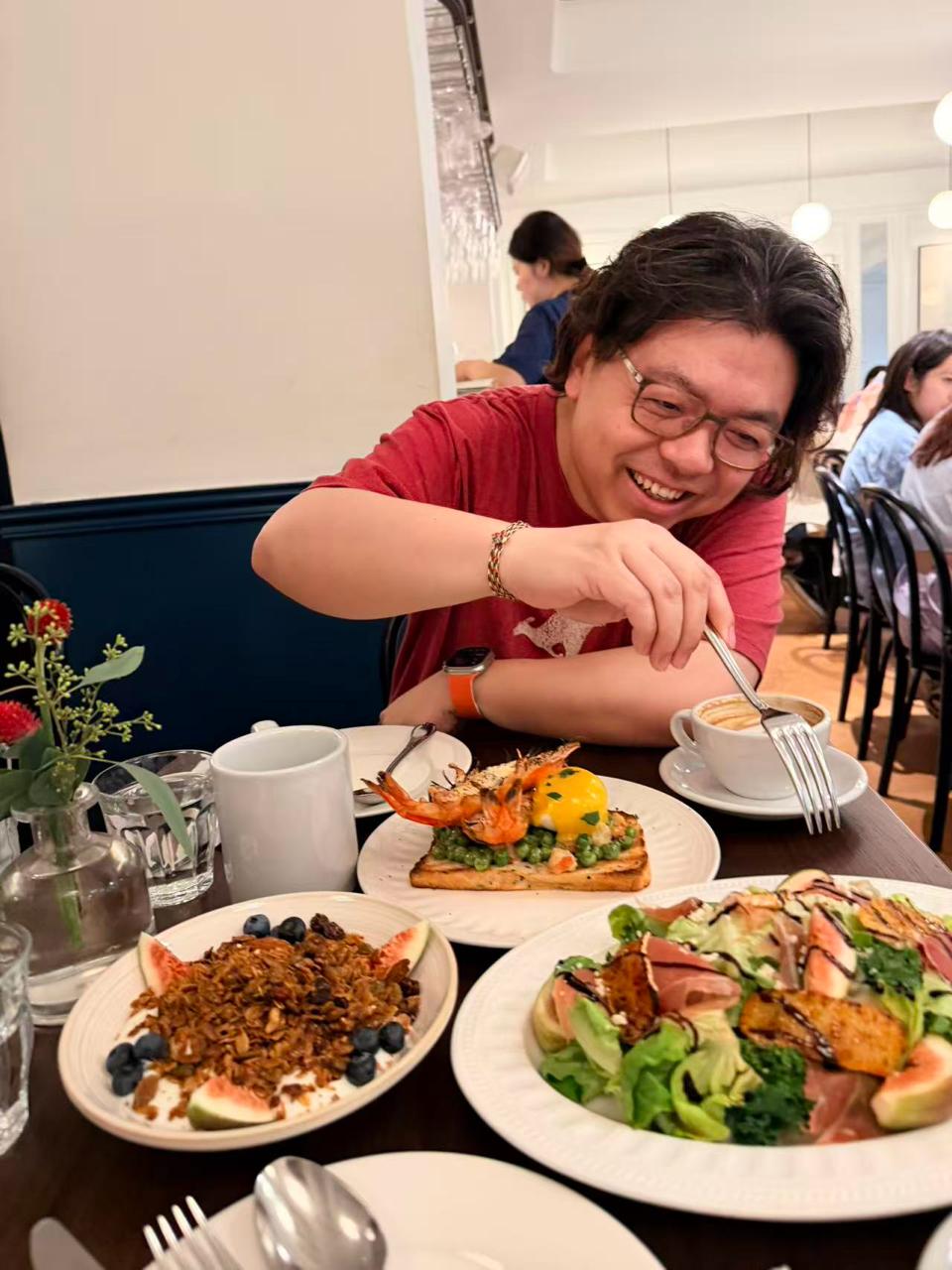
He is the founder of XMind, and a friend of mine. We meet from time to time to talk about technology, product, and how we live.
The notes below are from those conversations.
AI is changing the trade-offs in product development
Building a product used to mean a familiar dilemma.
On one side, you want something more complete, with a better user experience. That means harder engineering and a longer cycle.
On the other, you ship something barely usable, get it out fast, and iterate on user feedback.
Most startups used to pick the second path. That is what Lean Startup and agile have always pushed: make it first, then keep improving it.
The AI era may be changing that logic.
As AI coding and AI agents get better, a lot of work that used to take a large human team can now be done with AI in the loop.
We used to choose between "perfect" and "fast." Now it may be possible to go further in one shot, and let AI carry more of the implementation.
He put it well:
We used to polish with a small hammer. Now we can let AI swing a sledgehammer.
In the AI era, finding what you love matters more than before
On education, he talked about how his own view has shifted.
When his kid first arrived in Australia, he still wanted him to enter programming contests.
Now he thinks the first job is to help the child find an interest. If that takes a while, don't rush it. Lying flat for a bit is fine.
Zoom out, and this may be a short window for exploration and trial-and-error before AI takes over at scale — maybe only a few years.
His view:
Finding what you are interested in, and what you love, is the most important thing. In the AI era, that may matter even more than it used to.
Only interest and love will keep someone putting in the work over time.
In the past, even without love, you could treat something as a craft, learn it, and still do reasonably well.
Now the weight of love will go up a lot. It will count for more than it used to.
AI will change how teams are organized
On how companies are organized, he brought up QA.
The old value of a testing team was understanding the mistakes people make when they write code, then designing tests around those mistakes.
Code was mostly written by people, so testing was built around human error patterns.
More and more code is now generated by AI. That calls for a new testing and QA process that can catch the defects in AI-written code.
Testing jobs may not simply continue in the old shape. They will have to fit the new failure modes of AI-generated code.
Grok Bot: two different bets on AI products
We don't fully agree on Grok Bot.
His view:
What makes Claude more advanced is that it weakens role distinctions. With persistent context and links across sessions, the AI feels more like a long-term collaborator.
My view:
Grok Bot's way of abstracting roles is friendlier for ordinary users.
Add Grok Build and a cloud computer, and for a regular person it feels like having a cheat code.
These may be two different product directions:
One is closer to a long-term collaborator — continuous understanding, deep partnership.
The other is closer to a toolbox of capabilities — roles and scenarios that lower the barrier to entry.
We kept our different views and looked for common ground.
FDE: fix the data first, then the process
On the plane we also talked about FDE (Forward Deployed Engineer).
He shared a case:
A leader at his company has no technical background, but used AI and MCP to connect data from an old product. Operations and management got much smoother.
Our factory is different. The management process is complicated, we are still sorting out the data, and FDE has not gone well.
His view:
Fix the data first, then the process. That is how you actually get out from under messy management work.
For a lot of companies, the problem is not a missing AI tool. The underlying data and business processes are not ready.
Closing
What stayed with me most: AI may not just raise efficiency. It is changing things we used to take for granted.
A lot of old choices existed because cost and resources were limited, so we had to trade one thing off against another. AI has lowered the cost of building. That leaves a harder question: what actually matters?
In the end, direction, interest, creativity, and the ability to keep going may matter more than the technology itself.